Notes › The sweepstakes model
Note 02 · The currency design
The sweepstakes model and why it shapes bot incentives
Honestly, forget the table felt for a second — the real subject of a sweepstakes poker platform is its currency. Two coins, two sets of rules, and exactly one path you can redeem. That structure is why the platform is legal in most of the US and Canada, and it’s why any automated play has only one place worth targeting.
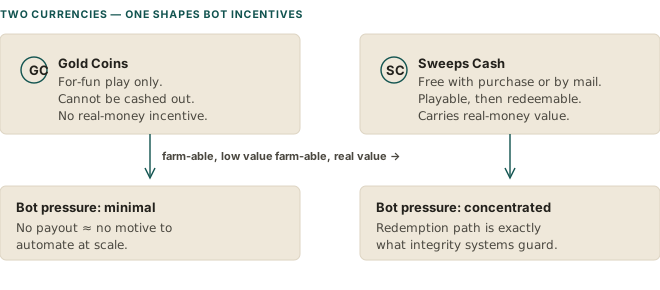
Gold Coins are a for-fun currency with no cash value. Sweeps Cash is a promotional sweepstakes currency: you never buy it directly, it accompanies Gold Coin purchases or arrives by free mail-in entry, and it alone can be redeemed. Because only Sweeps Cash converts to value, any meaningful bot incentive collapses onto that one currency — which is also the one the operator watches hardest.
Two currencies, one redeemable
The sweepstakes model deliberately separates play from prize. Gold Coins are the everyday chips: you receive them, you can buy more, and you use them to sit at tables. They are entertainment tokens and stop there. Sweeps Cash is the promotional layer that sits beside them. Crucially, it cannot be purchased on its own — selling a chance to win prizes for money is what would turn the product into gambling in jurisdictions that prohibit it. Instead, Sweeps Cash is given: as a bonus attached to Gold Coin packages, through daily promotions, and via a no-purchase postal entry that has to exist for the sweepstakes to be lawful.
Why this exists at all
The design is a response to law, not to game theory. By framing prizes as a sweepstakes with a genuine free entry route, the operator avoids the “consideration + chance + prize” trio that defines illegal gambling in much of the US. That is why a player in a state with no licensed online poker can still play — and occasionally redeem — without the platform being an online cardroom in the legal sense. The fairness and integrity obligations are real, but they sit inside a sweepstakes frame rather than a regulated-gaming one.
How the model changes the bot question
Now layer automation on top. A bot grinding Gold Coin tables is producing tokens that cannot leave the system — the effort buys nothing transferable. The economic case for building, buying or running such a thing is close to zero. Move the same bot to Sweeps Cash play and the calculus flips: those balances can be redeemed, so volume has value, and the platform’s anti-fraud surface naturally orients around exactly that path.
| Dimension | Gold Coins | Sweeps Cash |
|---|---|---|
| Purpose | For-fun play | Promotional sweepstakes |
| How obtained | Bought or granted | Free with purchase, or by mail |
| Redeemable | No | Yes, subject to terms |
| Real incentive to automate | Negligible | This is where it lives |
The free postal-entry route is easy to dismiss as a legal footnote. It is the load-bearing wall: remove it and the sweepstakes framing — and the legality that rests on it — falls down.
The honest takeaway
A sweepstakes platform does not abolish the possibility of automated play; software is software. What it does is concentrate the incentive into a single, heavily watched currency and drain the motive out of everything else. So the realistic version of the question is not “can a bot play here” but “is grinding Sweeps Cash with a program worth the detection risk” — and the next note looks at how that detection actually works. Read on: Detection & fair play.
If something here is out of date — terms and routes change — point it out and these notes get fixed.
Reach out